Gold vs Bitcoin: Which Inflation Hedge Wins in 2026
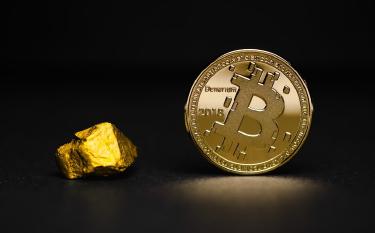
The debate between gold and Bitcoin as inflation hedges has intensified throughout 2025 and into early 2026. Both assets claim the throne as the ultimate store of value, yet they couldn’t be more different in their mechanics, history, and risk profiles.
So which actually performs better when inflation erodes purchasing power?
The Historical history
Gold has roughly 5,000 years of monetary history backing its reputation. During the inflationary 1970s, gold prices surged from $35 per ounce in 1971 to $850 by January 1980-a return exceeding 2,300%. More recently, gold climbed from $1,520 in early 2020 to hover around $2,400 in late 2025, representing roughly 58% appreciation during a period of elevated inflation.
Bitcoin’s history is necessarily shorter. Since its 2009 launch, BTC has produced astronomical returns that dwarf virtually any traditional asset. But here’s the nuance that matters: Bitcoin’s performance during specific inflationary periods shows mixed results.
During the 2021-2022 inflation spike, Bitcoin actually declined nearly 65% from its November 2021 peak while consumer prices continued climbing. Gold, meanwhile, held relatively steady and even gained ground. This divergence raises questions about Bitcoin’s reliability as a pure inflation hedge versus its role as a speculative growth asset.
Volatility: The Elephant in the Room
Any serious comparison must address volatility differences.
Gold’s 30-day realized volatility typically ranges between 10-20%. Sharp moves happen, but they’re relatively contained. An investor holding gold through turbulent markets can reasonably expect their position to maintain most of its value.
Bitcoin operates differently. Its 30-day volatility regularly exceeds 50-80%, with drawdowns of 30-40% occurring multiple times per year. The asset that gained 150% can lose 60% within months. For investors seeking stable purchasing power preservation, this characteristic creates genuine problems.
Consider a practical scenario. An investor allocates $100,000 to an inflation hedge in January. By December, inflation has run at 5%, eroding $5,000 in purchasing power. Gold might finish the year up 8% or down 4%-either outcome roughly accomplishes the hedging objective. Bitcoin could finish up 90% or down 45%. The upside looks attractive until you realize the downside would leave you significantly poorer than inflation alone.
Correlation Analysis Tells a Different Story
Research from the Federal Reserve Bank of Cleveland and multiple academic institutions has examined correlation coefficients between these assets and CPI.
Gold shows a moderate positive correlation with inflation expectations over multi-year periods. When markets anticipate rising prices, gold typically appreciates. This relationship isn’t perfect-gold can decline during inflationary periods if real interest rates rise sharply-but the connection exists.
Bitcoin’s correlation with inflation remains statistically weak. Through 2024-2025, Bitcoin’s price movements correlated more strongly with the Nasdaq 100 (approximately 0. 6-0. 7 correlation) than with inflation metrics. BTC behaves primarily as a risk-on technology investment rather than a monetary hedge.
This matters for portfolio construction. Adding gold to a traditional 60/40 portfolio historically reduces volatility while maintaining returns. Adding Bitcoin increases both potential returns and portfolio volatility. Different tools for different objectives.
Supply Dynamics and Scarcity Arguments
Bitcoin advocates correctly emphasize its fixed 21 million coin supply. No central authority can create more Bitcoin, making it arguably “harder” money than gold.
Gold’s supply grows approximately 1 - 5-2% annually through mining. While this gradual dilution exists, it’s predictable and modest. The World Gold Council estimates above-ground gold stockpiles exceed 200,000 metric tons, with another 50,000+ tons remaining underground.
Bitcoin’s supply is mathematically capped, with approximately 19. 5 million BTC already mined. The remaining supply will be released through 2140, with block rewards halving every four years. The April 2024 halving reduced new supply issuance to 3. 125 BTC per block.
On pure scarcity metrics, Bitcoin wins. But scarcity alone doesn’t guarantee value preservation during inflationary periods-tulip bulbs were scarce too.
Institutional Adoption Trajectories
The institutional area shifted dramatically between 2023-2026.
Bitcoin spot ETFs, approved in January 2024, accumulated over $50 billion in assets within their first year. BlackRock’s IBIT became one of the most successful ETF launches in history. Major corporate treasuries-including MicroStrategy with 150,000+ BTC-hold substantial positions.
Gold ETFs like GLD and IAU command approximately $100 billion in combined assets, with central banks holding roughly 36,000 tons valued near $2. 5 trillion at current prices. Institutional gold infrastructure has developed over decades rather than years.
Bitcoin is catching up rapidly on the institutional access front. But gold’s deeper integration into global financial systems provides stability that newer assets lack.
Practical Portfolio Considerations
Rather than choosing one over the other, sophisticated investors increasingly hold both-but in different allocations for different purposes.
A conservative approach might allocate 5-10% of a portfolio to gold as genuine inflation insurance. The position exists to preserve purchasing power, not generate outsized returns. Rebalancing occurs annually, selling after strong gold years and buying during weak ones.
Bitcoin allocation, if included, might range from 1-5% for most investors. This position represents speculative upside exposure rather than defensive hedging. The asymmetric return profile-potential for 10x gains against potential for 80% losses-suits small position sizes.
Combining both provides different exposures: gold for stability during risk-off environments, Bitcoin for potential appreciation during risk-on periods. Neither perfectly hedges inflation in isolation, but together they address different scenarios.
The Verdict for 2026
Gold remains the more reliable inflation hedge based on historical evidence, correlation data, and volatility characteristics. Investors needing genuine purchasing power protection during inflationary periods should weight gold more heavily than Bitcoin.
Bitcoin offers something different-asymmetric speculative upside with potential inflation-hedging properties that may strengthen as the asset matures. Its fixed supply and growing institutional adoption create a reasonable long-term thesis. But calling it a reliable inflation hedge today overstates current evidence.
Here’s the honest take: gold is the proven defensive player, Bitcoin is the high-upside prospect with limited history. Most investors benefit from understanding what each actually does rather than treating them as interchangeable.
The winner depends entirely on what problem you’re solving. For stable inflation protection, gold. For speculative exposure to digital asset appreciation, Bitcoin. For comprehensive portfolio construction, consider both in appropriate proportions.
Neither asset is inherently superior. They’re simply different tools addressing overlapping but distinct investor needs.